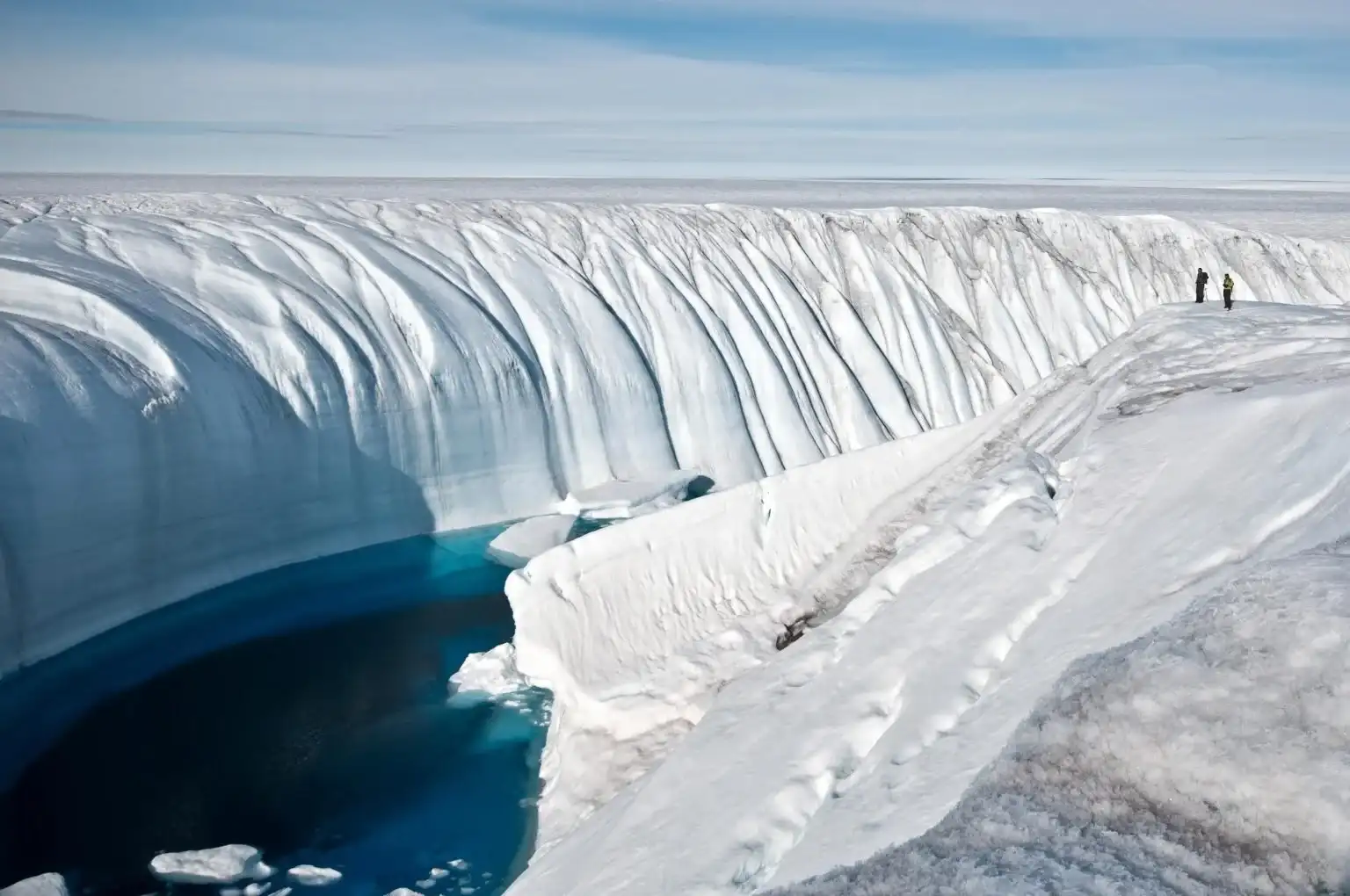
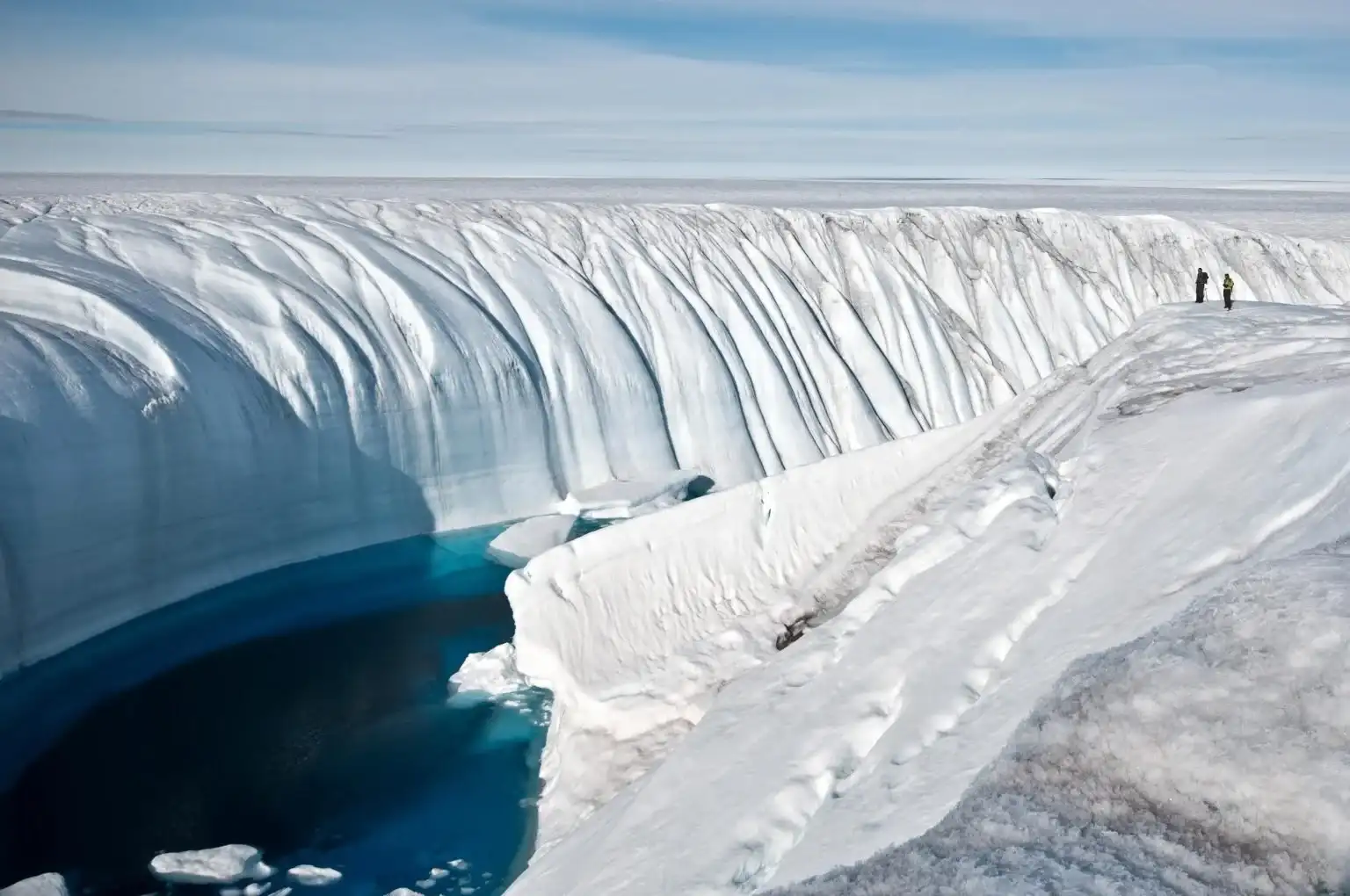
Surface meltwater flowing towards the ocean through a channel in Greenland. Credit: Ian Joughin.
Glacier Melt
We investigate the dynamics and long-term evolution of cold environments, such as ice-dammed surface lakes in the Alps and Antarctic subglacial lakes.
The physics of pristine aquatic environments, hidden beneath kilometers of ice
Subglacial lakes (SL) are pockets of water trapped between the polar ice sheets and continental bedrocks. These bodies of water are buried under 2 km of ice on average and can be as large as Lake Michigan in the United States. To date, 400 SL have been detected in Antarctica and 50 have been found in Greenland. SL offer an exciting opportunity for scientists to probe whether microorganisms can thrive in cold-temperature high-pressure water environments, similar to subsurface oceans on icy moons.
The physics of SL involves several key ingredients that motivate several research projects in our team: (i) turbulent thermal convection forced by the geothermal heat flux, (ii) horizontal thermal convection along the top ice-water boundary due to variation of ice thickness and pressure-dependence of the freezing point, and (iii) a nonlinear equation of state for freshwater.